
Three events, one BARDA message: what MCM developers need to hear
BARDA CBRN team has spoken at three different events this year (MTEC, BIO and RRPV). What does industry need to know about the plans for MCMs?
BARDA's CBRN Medical Countermeasures leadership (Chris Houchens, and Daniel Wolfe) appeared at MTEC, BIO, and RRPV over the past few months. Here's what BARDA itself is consistently signaling to industry:
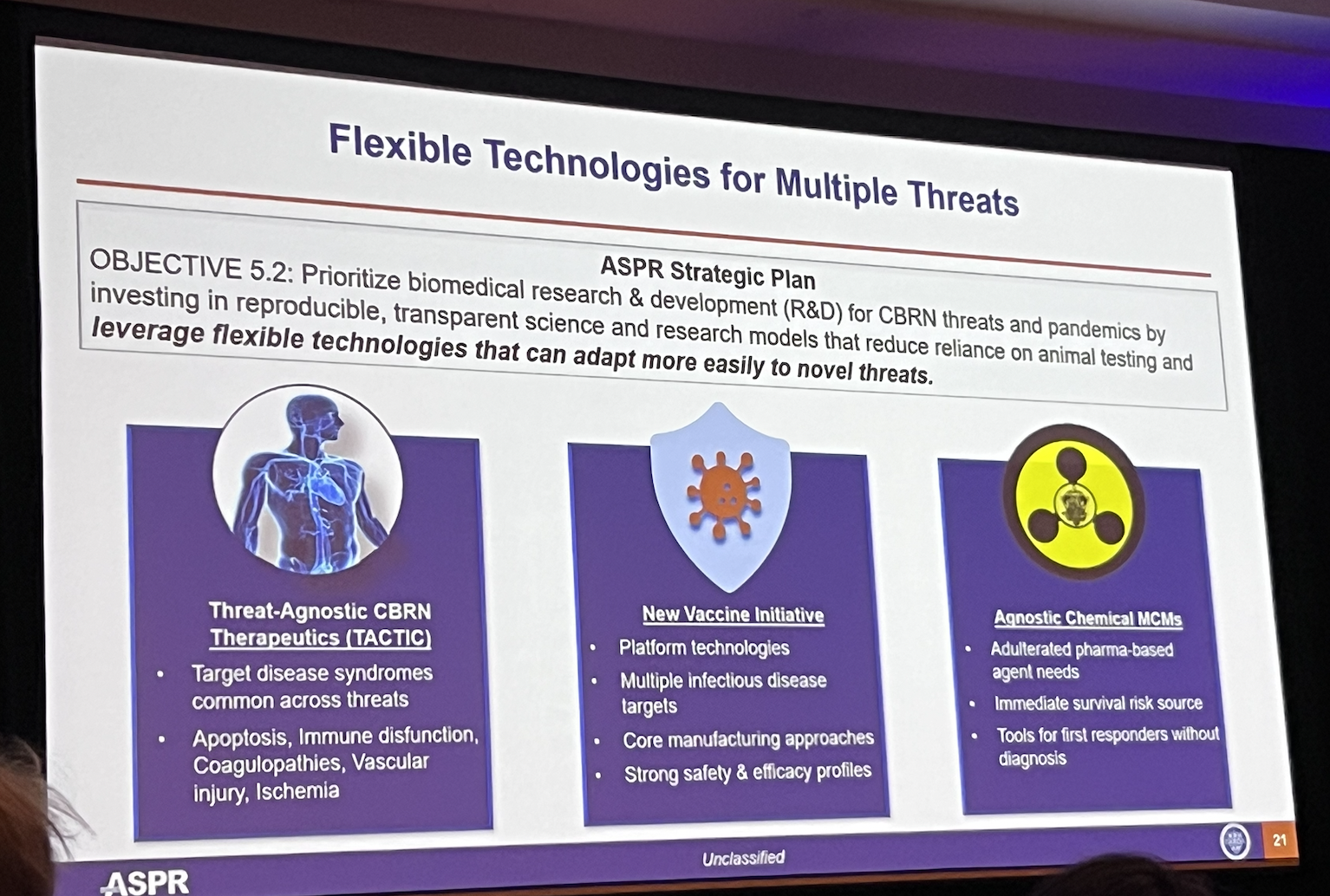
→ Platforms over single-threat products. Houchens and Wolfe both emphasized host-directed and syndrome-directed therapeutics, broad-spectrum approaches, and flexible manufacturing platforms that can pivot across threats. This is great news for companies in the broad-acting anti-virals and vascular leak/ARDS/Rad-Nuc spaces.
→ Reducing animal use is a real priority. Microphysiological systems (MPS) and new approach methodologies (NAMs) came up at every event. Houchens described a growing portfolio of NAM/MPS technologies; Wolfe tied the same effort directly to expediting FDA licensure.
→ Repurposing FDA-approved drugs is a fast lane. Wolfe called this a huge piece of BARDA's overall plan, especially in the Chem and RAPID (Rapid Antibody Production for Immunoassay Diagnostics) portfolios, and flagged RRPV as an ideal mechanism for that kind of teaming.
→ Commercial and dual-use viability influences funding decisions. Houchens was direct: BARDA is looking for partners whose products have both government and commercial utility, because manufacturing-and-deliver-to-SNS-only relationships aren't sustainable.
→ Domestic manufacturing capacity is a growing focus. Wolfe pointed to onshoring goals and the BioMAP Consortium as the vehicle for reducing cost of goods and building sustainable domestic capacity for priority countermeasures.
→ Engagement before submission, every time. Across all three venues, the consistent ask was: talk to the program manager, use TechWatch, don't let a cold proposal be the first conversation.
Bottom line: Platform technologies, reduced animal reliance, commercial viability, domestic manufacturing, and early engagement are no longer nice-to-haves. They're the order of the day.
#BARDA #MedicalCountermeasures #CBRN #Biodefense #MCM
MTEC Multi-Topic RPP for Military Medical Prototype advancement
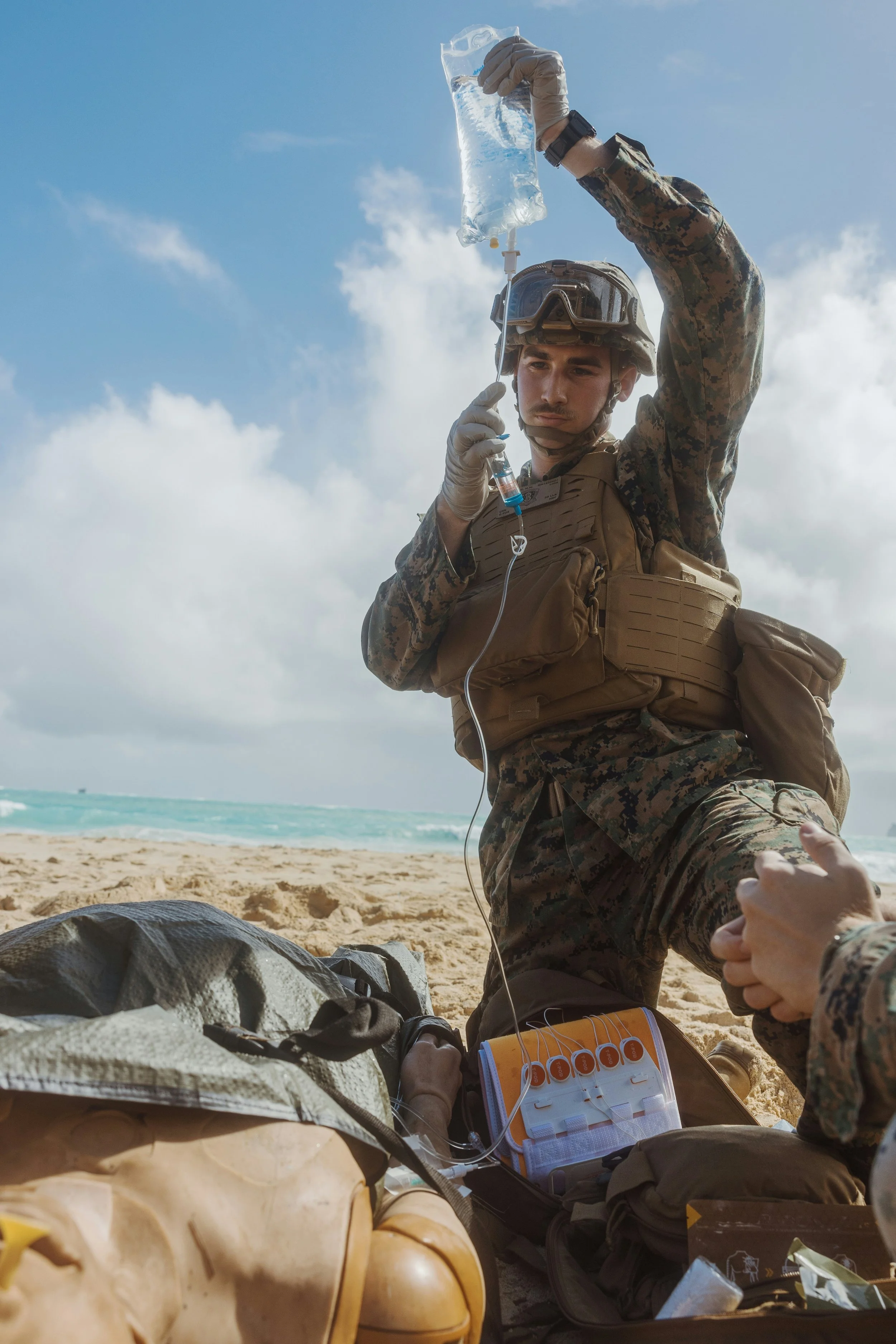
The Medical Technology Enterprise Consortium (MTEC) has posted a pre-announcement for an upcoming Request for Project Proposals (RPP) soliciting a broad range of medical prototype technological and knowledge solutions related to the Focus Areas of Interest (also called “Focus Area(s)”) listed below. Proposed solutions may include medical techniques, knowledge products, and materiel (e.g., medical devices, drugs, and biologics). Military relevance is a key feature of the upcoming RPP.
The Defense Health Agency of the US Department of War is soliciting a broad range of medical prototype technological and knowledge solutions related to the Focus Areas of Interest (also called “Focus Area(s)”) listed below. Proposed solutions may include medical techniques, knowledge products, and materiel (e.g., medical devices, drugs, and biologics). Military relevance is a key feature of the upcoming RPP. Each proposal must address exactly one focus area. Minimum Knowledge/Technology Readiness Level (KRL/TRL) of 3 is required at submission, and the proposed work cannot have been submitted to MTEC in the past two years.
Accelerating MCM Development Panel at #BIO2026
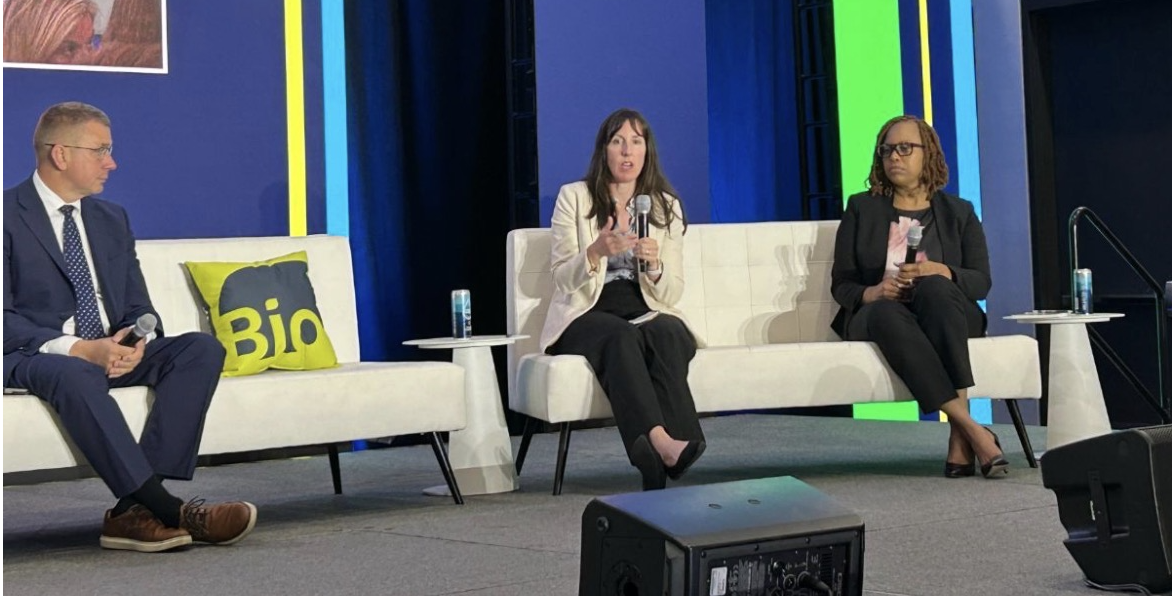
I sat in on the "Driving Innovation for Preparedness: Accelerating MCM Development" panel at BIO 2026, moderated by Vic Suarez (BluZone Bio) with panelists Maryann Edwards (Dept. of War, ODASD-CBRND), Jen Dabisch (CBRN Defense Program), and Chris Houchens (BARDA/ASPR, HHS). The session focused on NAMs, AI/ML in MCM development and the possibility of a DoW facilitated private capital tie-in with MCM development programs.
I sat in on the "Driving Innovation for Preparedness: Accelerating MCM Development" panel at BIO 2026, moderated by Vic Suarez (BluZone Bio) with panelists Maryann Edwards (Dept. of War, ODASD-CBRND), Jen Dabisch (CBRN Defense Program), and Chris Houchens (BARDA/ASPR, HHS).
Here are some of the highlights for MCM companies from my perspective:
1. NAMs are definitely a priority for the US Government. BARDA currently has roughly 10 different New Approach Methodology (NAM) / microphysiological systems (MPS) technologies in active development, and the Department of War is co-developing complementary tools with an eye toward integrating them. Both agencies were explicit that reducing animal use under the Animal Rule is now a stated portfolio priority, not just a talking point tied to legislative pressure. If your technology touches NAMs, MPS, or alternative safety/efficacy data generation, this is a live conversation to have with program managers now.
2. AI/ML is being operationalized for MCM development with key national laboratories. The Department of War's new "Digital Biosecurity Forge" initiative — a public-private partnership with Lawrence Livermore National Laboratory, DOE labs, HHS, and academic/industry partners — is using AI/ML and high-performance computing to accelerate MCM development and bio-surveillance, with the explicit goal of helping technologies advance faster through the pipeline.
3. A private capital bridge for late-stage development may be coming. This was the most interesting moment of the session. Under the Department of War's RAPID program, the model appears to be: government funds Phase 1 and early Phase 2, building out a tiered "data warehouse" of candidates with safety data and CMC work in hand — and then private capital (VC/PE) steps in to bridge late Phase 2 through Phase 3, the most expensive and highest-attrition stretch of development. DoW wouldn't confirm specifics on the record, but didn't shut the door on it either. If this materializes, it could meaningfully change how dual-use and CBRN-focused companies think about a financing strategy beyond Phase Two.
#BIO2026 #MedicalCountermeasures #CBRN #BARDA #Biodefense #NAMs #GovCon
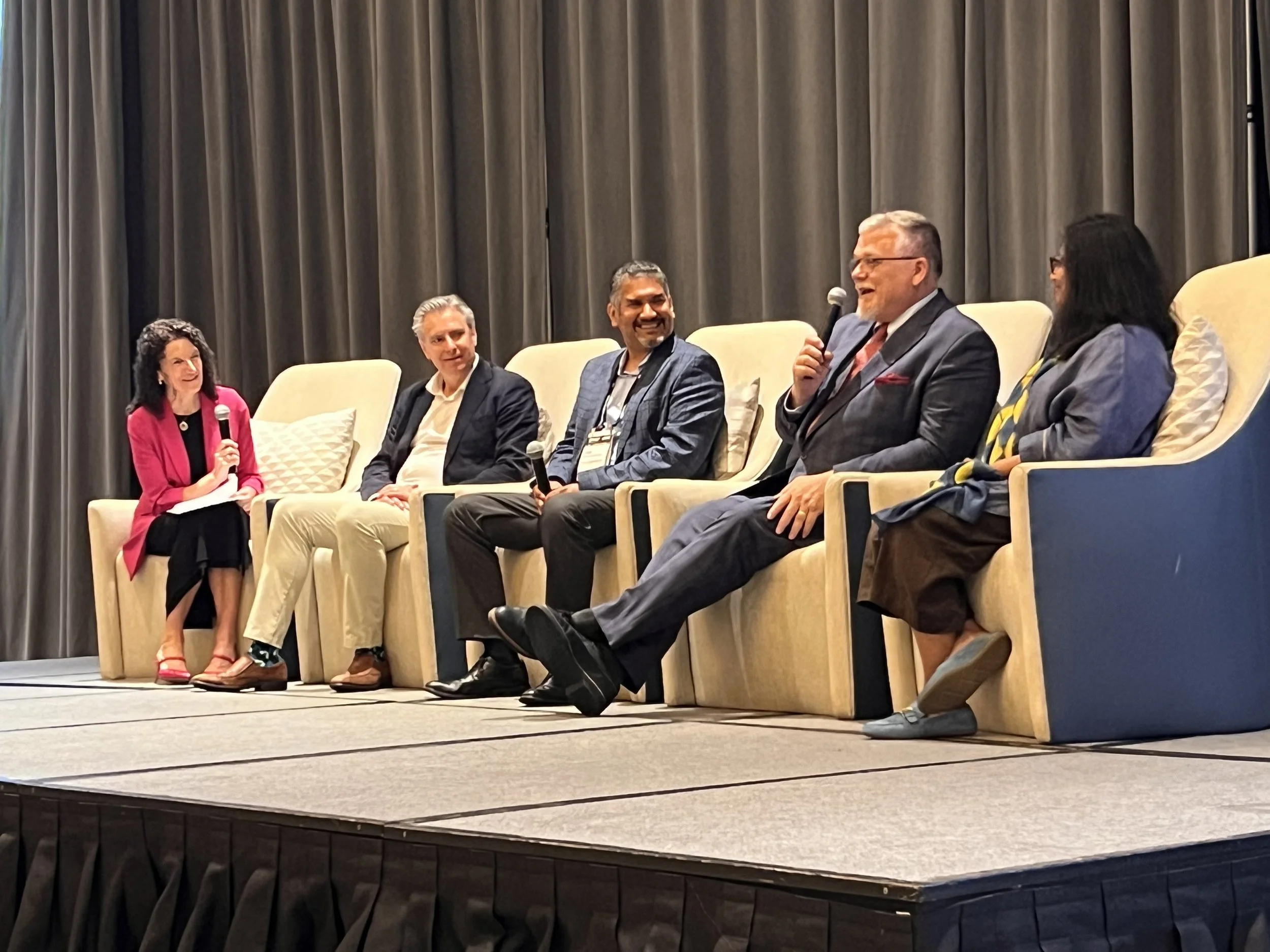
Dual Use and Defense: How Ontario's Life Sciences community is Engaging with the Defense Sector
Canada is moving fast to operationalize dual-use policy in real time — funding mechanisms, governance structures, and all. The throughline across all three companies on the panel at #BIO2026 was consistent: dual-use relevance (acquired as a military medical countermeasure plus marketed as a civilian product) tends to be discovered, not designed, and the institutions meant to support it (HERC, DIA, DRDC, NATO Diana) are still actively defining their own lanes. That's not a knock — it's the honest state of an ecosystem that's moving as quickly as the funding and the geopolitics demand.
One of the most substantive sessions I attended at BIO 2026 was "Dual Use and Defense: Ontario's Life Sciences and Clinical Trials Superpower" — a panel that did something rare: it moved past the buzzword stage of "dual use" and into the operational reality of what it actually takes for public/private alignment to build therapeutics that serve both civilian and military health needs.
Moderated by Maura Campbell (President & CEO, Ontario Bio/OBIO), the panel brought together Brad Sorenson (Providence Therapeutics), Brian Jahns (Vasomune Therapeutics), Jose Moran-Mirabal (TessellaBiosciences), and Ritu Banerjee (Interim Head, Health Emergency Readiness Canada/HERC, ISED). Here's what stood out.
Campbell set the scene by noting that Canada has moved quickly on the policy front: in February, the Prime Minister announced the country's first Defense Industrial Strategy, backed by $6.6B, and Ontario followed in May with its own 10-year Ontario Defense Industrial Strategy (ODIS). Worth flagging for anyone building a pipeline: NATO's Diana accelerator is currently running a 2027 cohort call focused on human survivability, closing July 3 — four of the five Canadian companies supported across Diana's two prior life-sciences cohorts are Ontario-based.
Three companies, three very different paths to "dual use"
What made this panel valuable wasn't the policy framing — it was hearing founders describe how dual-use applications actually emerged in their programs, almost always after the science, not before it.
Brian Jahns of Vasomune put it bluntly: the company's anti-vascular-leak molecule didn't change — what changed was the label. Vasomune is advancing the same compound against pulmonary/organ edema across a near-fully-enrolled Phase 2 pneumonia/ARDS program, a new initiative in acute burn resuscitation (≥40% TBSA), and dialysis-related neurologic injury. "It's the same molecule," he noted — military and civilian relevance simply track the same underlying biology toward different patient populations. His candor about funding (he didn't mince words: "money, money, money, money, and money") and the patchwork of non-dilutive support — NRC IRAP, two CDMRP/DoD grants totaling roughly $9.2 USD, a CRADA with two military hospitals, and a co-development deal with Japan's AnGes — was a useful reality check on how non-linear these funding paths still are, even for a clinically advanced asset.
Brad Sorenson (Providence Therapeutics) traced his company's dual-use identity back to COVID, when its mRNA platform — originally built for oncology, now leading with a pediatric brain cancer program launching in Australia — became globally relevant almost overnight. Jose Moran-Mirabal (Tessella Biosciences) described a more organic discovery: tissue-mimetic biomaterials developed for organ repair turned out to accelerate burn-wound healing with less scarring, opening a battlefield-medicine application the company hadn't originally targeted.
The government side: HERC is still building the plane while flying it
Ritu Banerjee was refreshingly direct about where things stand. HERC was stood up in November 2024 in response to COVID, sits within ISED but takes direction from the Minister of Health, and takes a broad "health security" view spanning pandemics through CBRN threats. Her clearest line: "We're all figuring out what dual use really means." She mapped the emerging federal architecture — the new Defense Investment Agency (now led by an external hire from RBC, designed to modernize defense procurement), DRDC's evolving role as Canada's closest analog to DARPA, and HERC's own still-small but growing program toolkit — while acknowledging the obvious tension: Canada's defense and health bureaucracies are genuinely collaborating for the first time, and that cultural shift takes longer than any strategy document suggests.
The candid part: what's actually holding Canada back
The panel didn't shy away from the hard parts. Jahns was characteristically blunt that excellent clinical trial infrastructure and strong academic research haven't translated into proportionate private and equity investment — pushing Canadian dual-use companies toward U.S. and international capital and licensing partners by default, not preference. Sorenson pointed to regulatory rigidity (particularly GMP requirements for early-phase trials) as a drag on genetic medicine and personalized therapeutics, citing Australia's more adaptive model as a benchmark. Banerjee acknowledged the structural challenge directly: clinical trials and healthcare delivery sit at the provincial level even as defense procurement is federal, and harmonizing ethics review and contracting across the federation remains unfinished business.
Why this matters beyond Ontario
For anyone working at the intersection of MCM, biodefense, and commercial biopharma, this panel was a useful field report from a country moving fast to operationalize dual-use policy in real time — funding mechanisms, governance structures, and all. The throughline across all three companies was consistent: dual-use relevance tends to be discovered, not designed, and the institutions meant to support it (HERC, DIA, DRDC, NATO Diana) are still actively defining their own lanes. That's not a knock — it's the honest state of an ecosystem that's moving as quickly as the funding and the geopolitics demand.
#BIO2026 #DualUse #Biodefense #MedicalCountermeasures #LifeSciences #DefenseIndustrialStrategy #NATO #Ontario #Vasomune
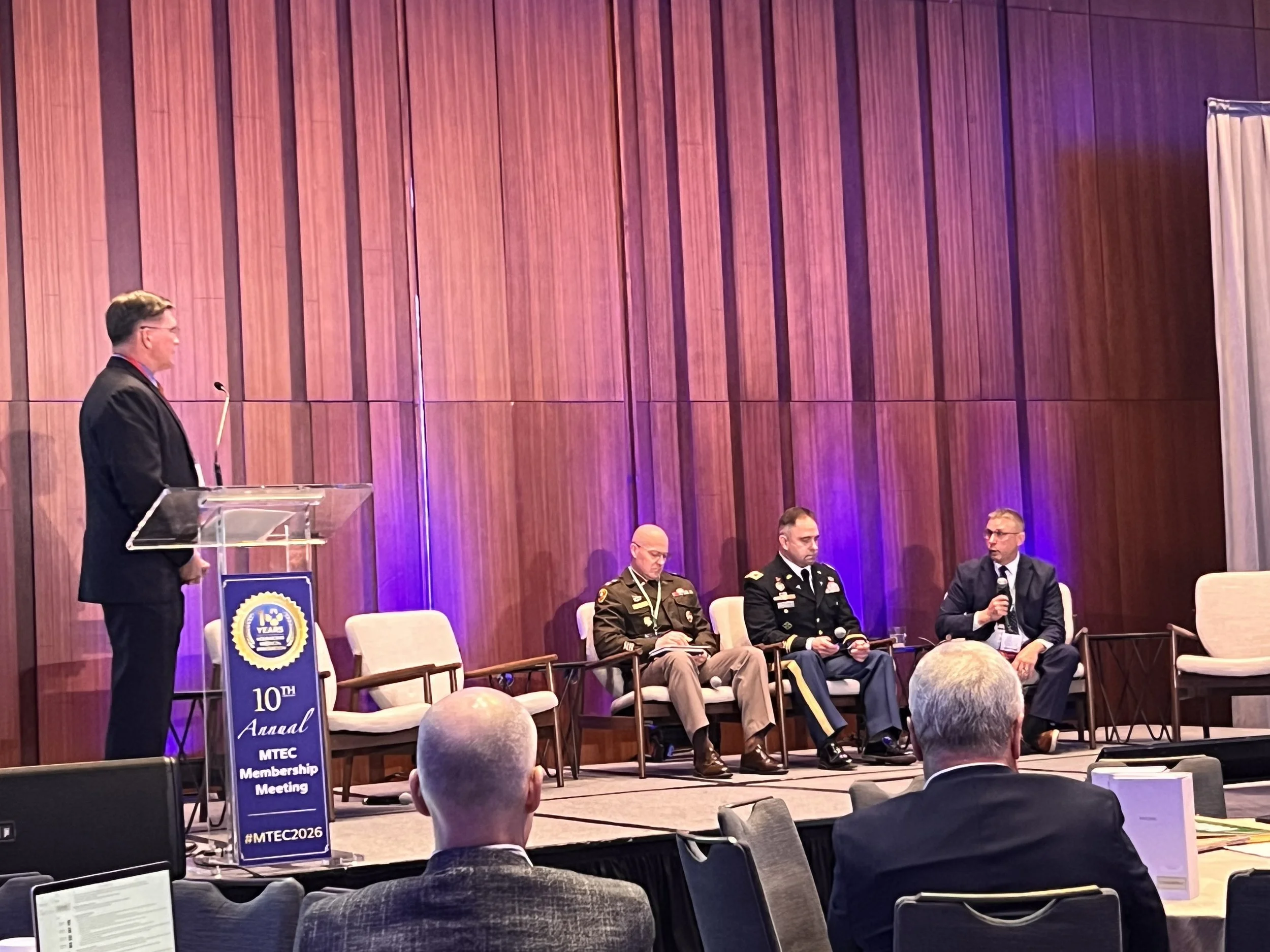
Latest cbrn news from mtec 2026
Just back from the 2026 MTEC | Medical Technology Enterprise Consortium annual meeting in Washington DC. It was great be there representing Island Pharmaceuticals and to see my old friend and first LinkedIn contact Shawn J. Green. Here are some key take-aways from the session with Capability Program Executive for Chemical, Biological, Radiological and Nuclear Defense (CPE CBRND), Biomedical Advanced Research and Development Authority (BARDA) and the Joint Requirements office:
CPE CBRND Medical named explicit top priorities for industry targeting: 1) Chemical prophylaxis — treatments that keep warfighters in the fight, not just on a path to recovery. 2) Host-directed / broad-spectrum therapeutics. The government needs platform approaches that work across threat classes. 3) IndoPaCom-relevant capabilities — geographic threat context matters. Start with endemic threats in that theater and build outward.
BARDA signaled ongoing portfolio evolution: 1) The COVID response demonstrated the necessity of rapid-response platform capabilities that can flex to novel threats quickly. 2) BARDA is now heavily focused on host-directed and syndrome-directed therapeutics — borrowed from the Chem/Rad/Nuke side and now applied to biological and emerging infectious disease portfolios. 3) On-demand and point-of-need manufacturing is a priority area where industry help is actively sought. The model of stockpiling hundreds of countermeasures is unsustainable. 4) Commercial utility is now an explicit evaluation criterion in proposals. If your technology has only a government use case, that is a red flag. Dual-use is the order of the day.
DoW budget reality: CPE-CBRND limited funding is spread across a wide CBRN capability development portfolio. Their effective ceiling is Phase 2 completion. After that, companies may need a commercial partner to help push a product across the Phase 3/licensure finish line. I have seen this first hand and it is going to be very challenging for many companies not prepared for this new reality.
Island Pharmaceuticals appoints highly experienced US biodefence executive Mark Herzog as Senior Global Health Security Advisor
Island Pharmaceuticals has expanded its engagement across the US biodefence landscape with the appointment of Mr Mark Herzog as Senior Global Health Security Advisor.
MELBOURNE Australia, 19 May 2026: Australian antiviral drug development company, Island Pharmaceuticals Ltd (ASX: ILA; Island or the Company) is pleased to provide the following update on US biodefence ecosystem engagement initiatives, implemented prior to the commencement of its planned dose escalation study next quarter to support the development of Galidesivir for the treatment of Marburg Virus Disease (MVD) under the US Food & Drug Administration’s (FDA) Animal rule. Most recently, Island has expanded its engagement across the US biodefence landscape with the appointment of Mr Mark Herzog as Senior Global Health Security Advisor. In parallel, the Company is also advancing a number of initiatives as part of its membership of the Medical Countermeasures Coalition (MC2), an international alliance focused on advancing vaccines, therapeutics and diagnostics targeting emerging infectious diseases and biological threats.
Appointment of Mark Herzog to expand US biodefence sector engagement:
Mr Herzog has over 25 years executive leadership experience across the biopharmaceutical, biodefence and clinical laboratory sectors, with particular expertise in global health security policy, medical countermeasure development, government affairs, defence acquisition and strategic stakeholder engagement. Most recently, he served 12 years in senior roles with a US pharmaceutical company focused on advanced drug delivery and medical countermeasure technologies, where he supported multiple US Department of Defence (DoD) and biodefence initiatives. Throughout his career, he has demonstrated a strong track record of developing and obtaining US$100m+ in US and international government contracts, leading FDA-approved product PR launches and building cross-sector coalitions across defence, public health and industry. Concurrently, he has positioned himself as a trusted advisor to senior government and industry stakeholders with deep expertise in DoD, Department of Human Health Services (HHS), the Biomedical Advanced Research and Development Authority (BARDA), North Atlantic Treaty Organisation (NATO) and allied procurement ecosystems.
Mr Herzog also serves on the executive committee of the Medical CBRN Defense Consortium (MCDC), a leading US biodefence consortium supporting the development and procurement of medical countermeasures targeting chemical, biological, radiological and nuclear threats. As part of his engagement, Mr Herzog will assist Island in expanding its presence within the US biodefence and global health security ecosystem, with a focus on strategic government engagement, medical countermeasure policy, procurement pathways and pandemic preparedness initiatives. His appointment is expected to support Island’s ongoing advancement of Galidesivir under the FDA Animal Rule pathway for Marburg Virus Disease, while also strengthening the Company’s engagement with key US government agencies, biodefence stakeholders, strategic partners and procurement networks relevant to future medical countermeasure opportunities, including potential Strategic National Stockpile (SNS) inclusion.
For the full release, please visit: https://www.islandpharmaceuticals.com/site/pdf/73dbaddf-4cbc-499a-b015-3697452f3564/Island-Bolsters-US-Biodefence-Readiness-Ahead-of-Trials.pdf?Platform=ListPage

"The U.S. could face an existential threat as early as 2027."
"The U.S. could face an existential threat as early as 2027." That was one of the most striking takeaways from Assistant Secretary of Defense Bob Kadlec's remarks at the 2026 Medical CBRN Defense Consortium (MCDC) and Countering Weapons of Mass Destruction (CWMD) annual meeting this month.
"The U.S. could face an existential threat as early as 2027." That was one of the most striking takeaways from Assistant Secretary of Defense Bob Kadlec's remarks at the 2026 Medical CBRN Defense Consortium (MCDC) and Countering Weapons of Mass Destruction (CWMD) annual meeting this month.
A few themes stood out:
The threat environment is changing rapidly.
Kadlec pointed to the bipartisan 2023 Strategic Posture Review which concludes that for the first time the U.S. now faces a two-peer nuclear challenge involving both China and Russia, while continuing to contend with emerging chemical and biological threats. Kadlec called the report "so stark, so profound and so startling" that he personally verified with six of its twelve commissioners whether they truly meant what they wrote. They did.
Medical countermeasure gaps remain significant.
Using the current hantavirus outbreak as an example, Kadlec highlighted the lack of broad-spectrum antiviral capabilities and emphasized the need for stronger coordination between DoD and HHS through the Public Health Emergency Medical Countermeasures Enterprise (PHEMCE).
Operation Warp Speed remains a model worth replicating.
As one of its architects, Kadlec argued that the speed, flexibility, and public-private partnership approach used during COVID-19 should inform future development of diagnostics, therapeutics, and other medical countermeasures. He described his goal as a " warp speed for countermeasures" utilizing the Other Transaction Authorities (OTA) contracting pathway designed for speed, flexibility, and performance-based accountability that the traditional acquisition contracts cannot match.
Industry partnerships will be critical.
Kadlec closed by saying the Pentagon must work closely with its industry partners. "It's not as much your obligation to work with us. It's our obligation to work with you. You have the solutions. We've got to figure out how best to work with you effectively." He framed the current threat environment as categorically different from the war on terrorism or the post-Cold War era of rogue actors: "What we're facing is an existential threat that if we don't mount an effective, credible deterrent set of capabilities across the domain of nuclear, chemical, biological, and radiological, we will be out of business." Kadlec explained that, “When I say out of business, our life and our freedom and all the good things that we’ve enjoyed may never be the same.”
Was this an overly pessimistic assessment—or a realistic appraisal of today's threat environment? For those who attended the meeting, I’d enjoy hearing what were your key takeaways?